Use the photographs you already own
Send the dish images you have. Cravd converts the approved image into a short portrait video while keeping the food recognisable.
Cravd turns approved restaurant photography into short dish videos inside a branded, multilingual QR menu—without an app download or guest payment processing.
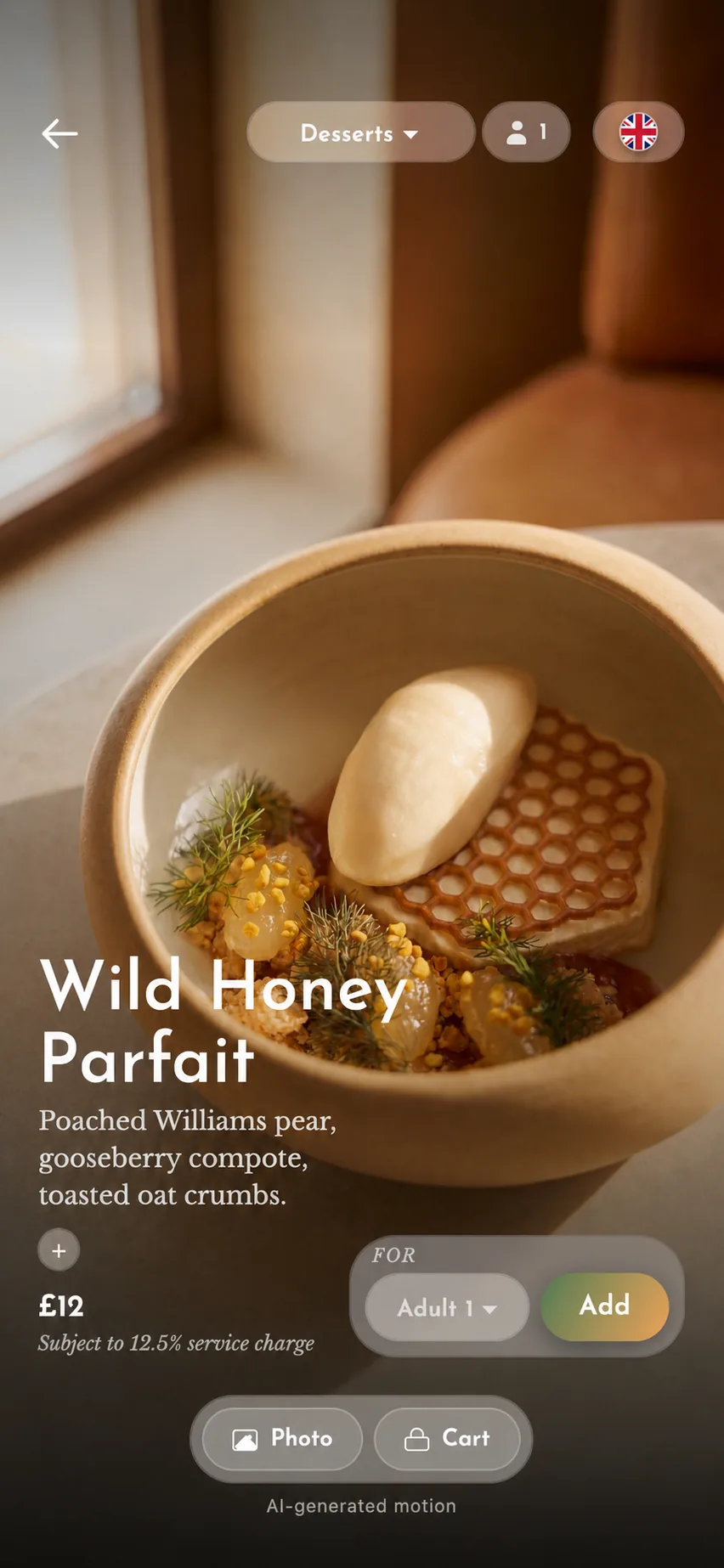
A restaurant video menu is a mobile menu where each dish can be shown as a short portrait video beside its description, price, dietary labels, calories and restaurant-confirmed allergens. Unlike a QR code that opens a PDF, it is designed for browsing on a phone and can stay connected to live menu availability.
| Guest experience | QR-linked PDF | Cravd video menu |
|---|---|---|
| Seeing the food | Static text or occasional photographs | Short dish video with a clear miniature and full details |
| Using it on a phone | Often requires zooming and scrolling around a page | Purpose-built mobile menu with no app download or sign-up |
| Keeping it current | The file must be replaced when information changes | Prices, availability and service windows update from the restaurant portal |
| Language and dietary needs | Usually separate files or dense symbols | Language switching, dietary filtering and structured allergen information |
Approved restaurant photography stays at the centre of the experience—from the menu grid to each full-screen reel.
Cravd manages the production work. The restaurant supplies one approved image per dish, reviews the result and decides what goes live.
Send the dish images you have. Cravd converts the approved image into a short portrait video while keeping the food recognisable.
Professional images arrive from your photographer as they are, and Cravd turns each approved image into a short portrait video.
When professional photography is not available, Cravd uses AI to create professional-quality imagery from the restaurant’s phone photo before producing the short video.
Cravd sends a photographer for a full day, covering the whole food and drinks menu in one visit. Those images then follow the same route as any other.
Nothing is published automatically. The restaurant watches the finished media, checks that it represents the real dish and approves it before guests can see it. AI-created media is identified clearly.
Guests can change language without leaving the menu. Safety information follows a stricter workflow: allergens are stored as structured codes and require restaurant confirmation before a dish can go live.
Dish names, descriptions and ingredients can be prepared in the languages the venue needs, giving international guests one menu rather than separate translated files.
Cravd can help structure the information, but it does not allow AI to certify or publish allergen data on its own. The restaurant remains the source of truth.
The menu carries the restaurant’s visual identity while the service team stays focused on hospitality.
A peer-reviewed restaurant-menu experiment found that video produced stronger mental imagery and desire to eat than pictures, narration or a conventional menu. It measured desire—not completed orders—so Cravd does not promise a guaranteed sales uplift. Commercial results should be measured in each restaurant.
Cravd sends structured guest choices to the restaurant’s kitchen display. It does not take card details or process the guest’s payment, so the restaurant keeps its usual payment flow.
Guests open the browser menu and confirm their party before browsing.
Dishes can be assigned by diner, with ingredients unticked when the guest wants them left out.
The order carries the table, diner, dishes, exclusions and notes instead of handwritten selections.
The team handles recommendations, the guest experience and payment through the restaurant’s normal process.
POS integration-ready: Cravd is prepared to connect during setup, while its own kitchen display can operate independently. A named POS connection is only promised once that connector has been delivered and verified.
Cravd counts every view, every add and every order against the dish it belongs to, and reports it in the restaurant’s own portal.
Ranked by views, orders and revenue, so a dish that is seen constantly and ordered rarely stops hiding behind the ones that sell.
Exclusions are counted per dish, so a recipe that is quietly being corrected at every table becomes visible.
Order counts by language, which is a measure of the room rather than an assumption about it.
Never viewed, or viewed often and ordered rarely, so nothing sits unnoticed for a whole season.
Each restaurant automatically receives an interactive menu for guests and social sharing, plus readable public restaurant, menu and dish pages for websites, search engines and AI assistants.
The mobile video experience guests open from a table QR code or a social profile.
Indexable pages containing the restaurant-approved menu and dish information in readable HTML and structured data.
These pages make the menu eligible for discovery; no platform can guarantee that Google or an AI assistant will index, rank or recommend a particular restaurant.
Yes. If the restaurant already owns suitable professional dish photography, Cravd can use the approved images as the starting point for video production.
No. The interactive menu opens in the phone browser from a QR code or public link, with no guest account or sign-up.
No. Allergen data is safety information. Cravd stores it in a structured form and requires restaurant confirmation before the dish can be published.
No. Guests send a structured order to the kitchen through the menu, while the restaurant takes payment through its usual process. Servers can spend less time taking manual notes and more time on recommendations, payment and the guest experience.
Cravd is prepared for POS integration during setup, but a named POS connector is only described as available after it has been delivered and verified. The Cravd kitchen display can work independently of a POS.
Pricing is tailored to the number of restaurant locations and the production work required. Cravd provides a written quote before work begins and does not charge guest transaction fees.
Bring your real menu to a short demo and see how the guest, restaurant and public-search experiences work together.
Book a demo