One link
Guests use the same table QR or public link, whatever language they choose.
Cravd gives restaurants one branded digital menu to manage every guest language, dish update and restaurant-confirmed allergen—without maintaining separate PDFs or asking guests to download an app.
Book a restaurant demo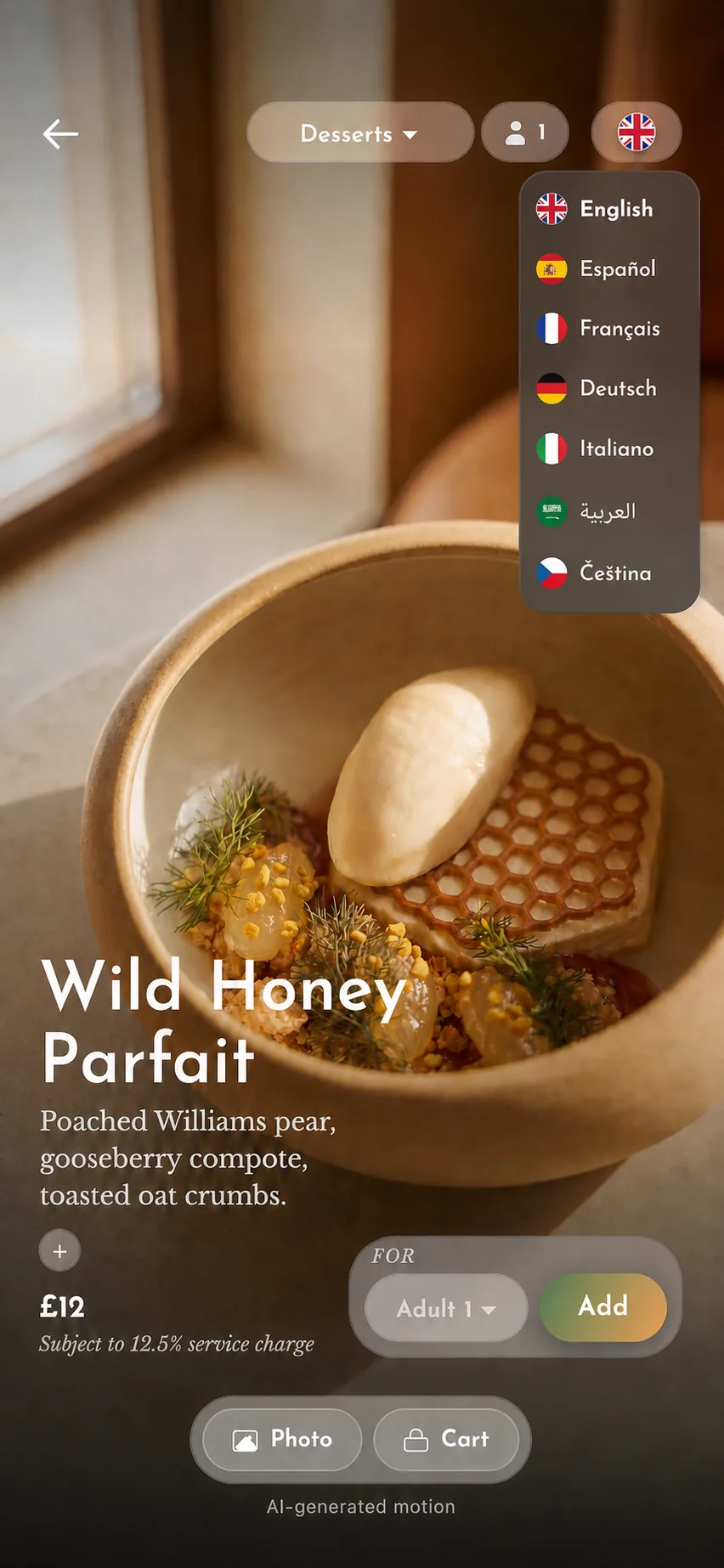
A multilingual restaurant menu presents the same approved dishes in several languages inside one digital menu. Guests choose their language without opening a separate PDF, while the restaurant keeps names, descriptions, ingredients, dietary labels and allergen information connected to one live catalogue.
Guests use the same table QR or public link, whatever language they choose.
Dish images, videos, availability and branding stay consistent across languages.
Restaurant-approved content replaces disconnected translated files.
Tourist venues, hotels and destination restaurants can explain unfamiliar dishes without asking guests to translate a paper menu on their phones.
Translation belongs inside the menu workflow, not in a collection of separate documents.
Name, description, ingredients and safety data begin with the restaurant.
Dish content is translated for the languages the venue needs.
The venue checks meaning, culinary wording and safety information before publication.
The same dish, image and video appear in the selected language.
Cravd keeps translation and allergen control separate. AI may help prepare language, but it does not certify safety information or publish allergens by itself.
Video, photography and translated descriptions work together instead of asking words to do everything.
Change availability, prices or menu details from the restaurant portal without replacing several files.
Every language uses the same restaurant logo, colours, fonts and approved dish media.
You write and price the menu once. Each guest sees it in their own language the moment they scan, including right-to-left layout for Arabic — the dish videos and photography stay exactly the same, so there is no second menu to keep in step.
When you change a price or add a dish, it changes everywhere at once. There is no version of the menu quietly six months out of date because nobody remembered to send the translator an update.
Menu prose and marketing copy translate well, and a light human review is enough. Safety-critical data is different: allergens are stored as numeric codes and rendered from a checked legend in each language, so a translation engine never gets the chance to turn "nut-free" into something dangerous.
A translated menu is usually a guess about who is in the room. Cravd counts orders by the language they were placed in, so the guess becomes a number you can act on.
If a language carries a real share of orders, it is worth the effort of keeping the menu current in it.
A language you added on a hunch, or never added at all, shows up in the order counts rather than in anecdotes from the floor.
Knowing which languages guests order in is a rota decision as much as a menu one.
They choose a language inside the browser menu. No app, account or separate QR code is required.
No. Cravd keeps the languages connected to the same restaurant catalogue, dish media and availability controls.
AI can assist with language preparation, but allergen data remains structured safety information and requires restaurant confirmation before publication.
Yes. Guest-facing language and kitchen-facing information can be resolved separately so staff receive clear operational details.
Yes. Languages should reflect the restaurant’s actual guest mix and are agreed during setup.
No. Cravd sends structured orders to the kitchen while the restaurant keeps its normal payment process.
Bring your current menu to a short demo and see how Cravd handles language, dish media and restaurant control together.
Book a restaurant demo