Structured information
Standard allergen codes replace inconsistent free-typed labels across dishes.
Cravd connects restaurant-confirmed allergen information to each dish inside one branded digital menu—without relying on scattered notes, separate PDFs or AI making safety decisions.
Book a restaurant demo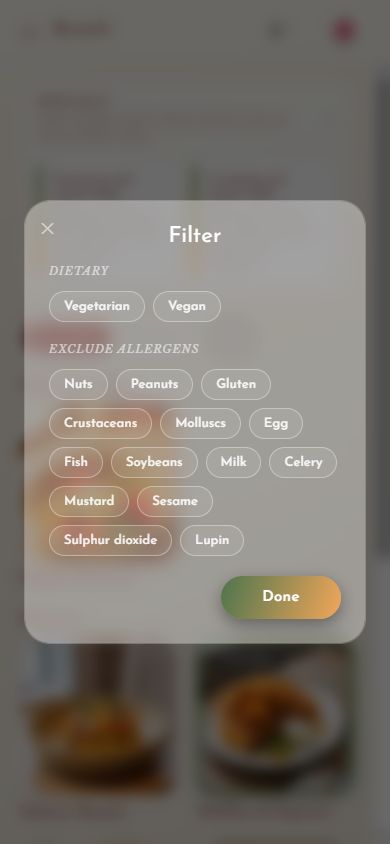
Restaurant allergen menu software helps a food business connect allergen information to individual dishes and present it consistently to guests. In Cravd, allergens are stored as structured codes, confirmed by the restaurant and shown separately from ordinary ingredients or preparation preferences.
Standard allergen codes replace inconsistent free-typed labels across dishes.
A restaurant staff member must confirm the safety information before a dish goes live.
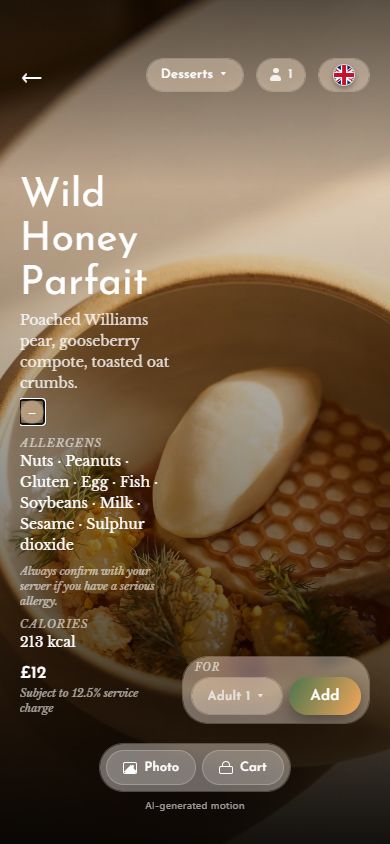
Guests can reveal the restaurant-supplied information on the dish screen before choosing.
Keep dish presentation beautiful while giving guests a clear route to the information supplied and maintained by the restaurant.
The software supports the workflow. The restaurant remains the source of truth.
Staff add the dish and select the relevant allergen codes.
Safety information requires restaurant confirmation before publication.
The confirmed data stays connected to the same dish across the menu.
Allergen information is available from the dish screen before ordering.
Removing an optional ingredient is a preparation request. It is not evidence that a dish is safe for someone with an allergy. Cravd keeps these two kinds of information separate throughout the guest and kitchen workflow.
UK food businesses must provide accurate information when non-prepacked food contains any of the 14 regulated allergens. Current Food Standards Agency best practice is written information supported by a conversation with staff. Cravd helps present restaurant-supplied information clearly, but does not replace staff training, kitchen controls, official guidance or professional advice.
Restaurant teams can update dish information without replacing printed or PDF menus.
The same confirmed codes drive the guest-facing allergen legend across supported languages.
Digital information supports—not replaces—a conversation with trained restaurant staff.
UK and EU law regulates fourteen allergens. Cravd stores each one as a fixed numeric code, so the same allergen means the same thing on every dish, in every language, and across every site you operate.
A guest filters by the allergens that matter to them and the menu narrows to what is worth considering. Nobody is asked to decode fourteen superscript numbers against a footnote, and nothing depends on a member of staff remembering a recipe change from three weeks ago.
This is where most multilingual menus quietly fail. If allergen information is written as free text and then machine-translated, "nut-free" can come back as something a guest reads as "nuts" — and on a safety-critical field there is no acceptable error rate.
No. Allergen information comes from the restaurant and must be confirmed by a human before the dish can go live.
Yes. Restaurant-confirmed allergen information can be revealed on the dish screen before a guest adds the dish to an order.
No. Cravd provides tools for presenting restaurant-supplied information, but the food business remains responsible for accurate allergen procedures and should follow current official guidance.
No. Optional ingredient exclusions are preparation preferences. Allergen information is separate structured safety data.
Yes. The allergen legend can be displayed in the guest’s selected language while the underlying restaurant-confirmed codes remain consistent.
No. Cravd can send structured orders to the kitchen while the restaurant keeps its normal payment process.
Bring your current allergen workflow to a short demo and see how Cravd keeps dish data structured, visible and under restaurant control.
Book a restaurant demo